
Kia Picanto (JA): Brake System / Brake Line
Components and components location
| Components |
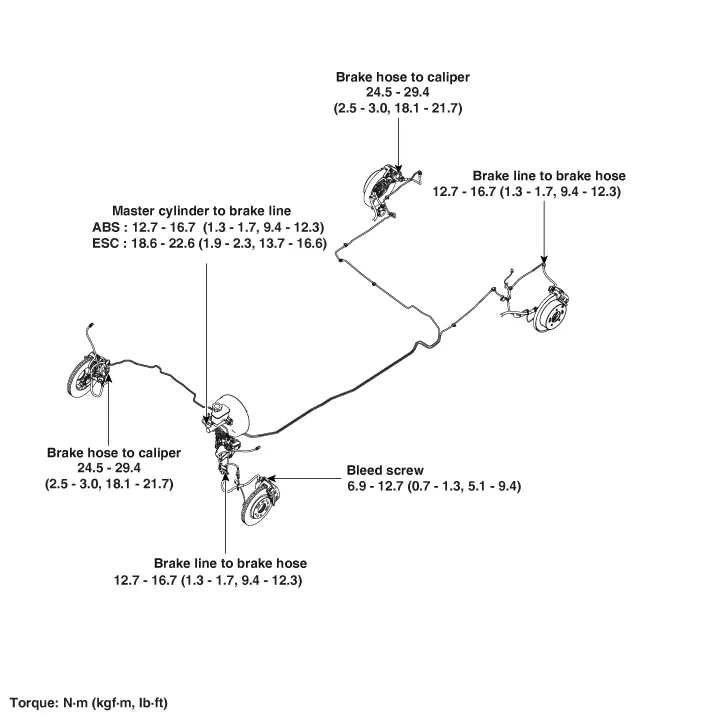
Repair procedures
| Removal |
| 1. | Remove the brake fluid level sensor connector.
|

| 2. | Remove the brake fluid from the master cylinder reservoir with a syringe.
|

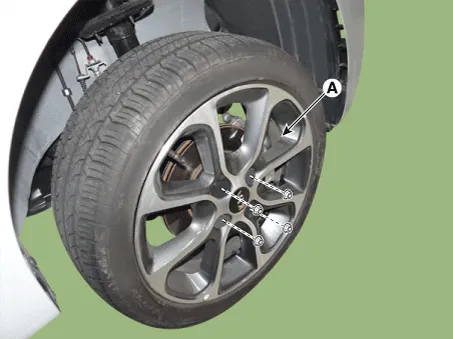
| 3. | Remove the front/rear wheel tire (A).
[Front]
[Rear]
|

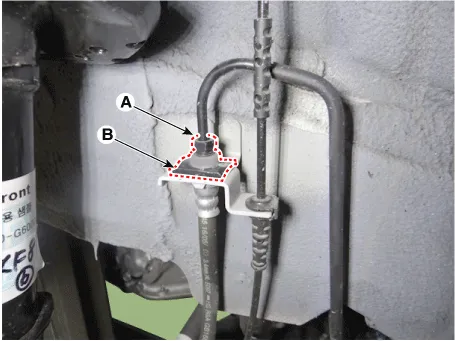
| 4. | Disconnect the brake tube by loosening the tube flare nut (A). |
| 5. | Remove the brake hose clip (B).
|
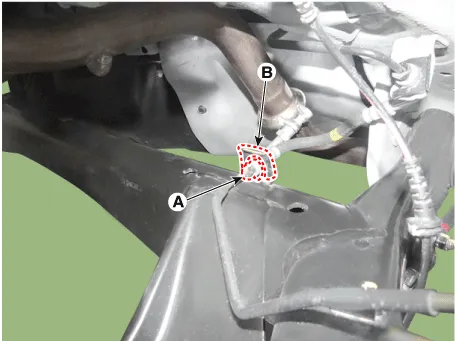
| 6. | Disconnect the brake tube by loosening the tube flare nut (A). |
| 7. | Remove the brake hose clip (B).
|
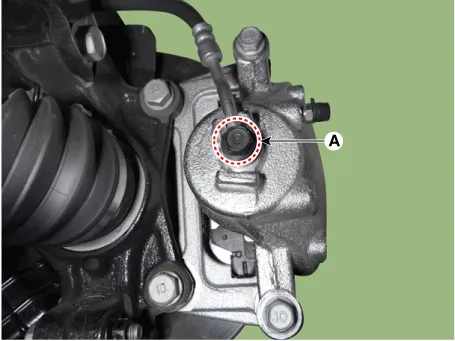
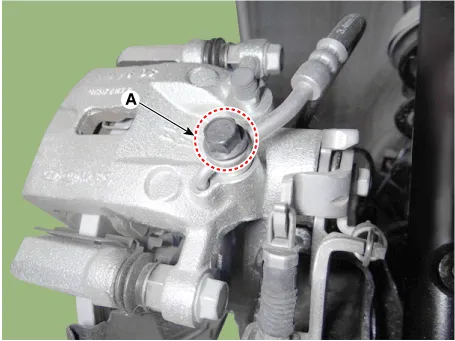
| 8. | Disconnect the brake hose from the brake caliper by loosening the bolt (A).
[Front]
[Rear]
|
| Inspection |
| 1. | Check the brake tubes for cracks, crimps and corrosion. |
| 2. | Check the brake hoses for cracks, damage and fluid leakage. |
| 3. | Check the brake tube flare nuts for damage and fluid leakage. |
| 4. | Check brake hose mounting bracket for crack or deformation. |
| Installation |
| 1. | Install in the reverse order of removal.
|

| 2. | After installation, bleed the brake system.
(Refer to Brake system - "Brake System")
|
| 3. | Check the spilled brake oil. |
Components and components location Components 1. Brake booster assembly 2. Reservoir 3. Master cylinder Repair procedures Removal 1.
Components and components location Components 1. Brake member assembly 2. Stop lamp switch 3. Brake Pedal Arm Assembly 4. Brake pedal Pad Repair procedures Removal 1.
Other information:
Kia Picanto (JA) 2017-2026 Service & Repair Manual: AVN Remote Controller
Components and components location Components 1. Left Remote Control Switch (Audio + Hands free + Voice) 2. Right Remote Control Switch (Cruise+Trip Computer) Schematic diagrams Circuit Diagram [Audio] [Audio + Bluetooth] [Audio + Bluetooth + Voice] [Trip (2 Button) + SEG LCD Cluster]
Kia Picanto (JA) 2017-2026 Service & Repair Manual: Smart Key Diagnostic
Repair procedures Inspection Self Diagnosis With Scan Tool It will be able to diagnose defects of SMART KEY system with KDS/GDS quickly. KDS/GDS can operates actuator forcefully, input/output value monitoring and self diagnosis. The following three features will be major problem in SMART KEY system.
Categories
- Manuals Home
- Kia Picanto Owners Manual
- Kia Picanto Service Manual
- Body Control Module (BCM)
- Normal Condition
- Cooling System
- New on site
- Most important about car
